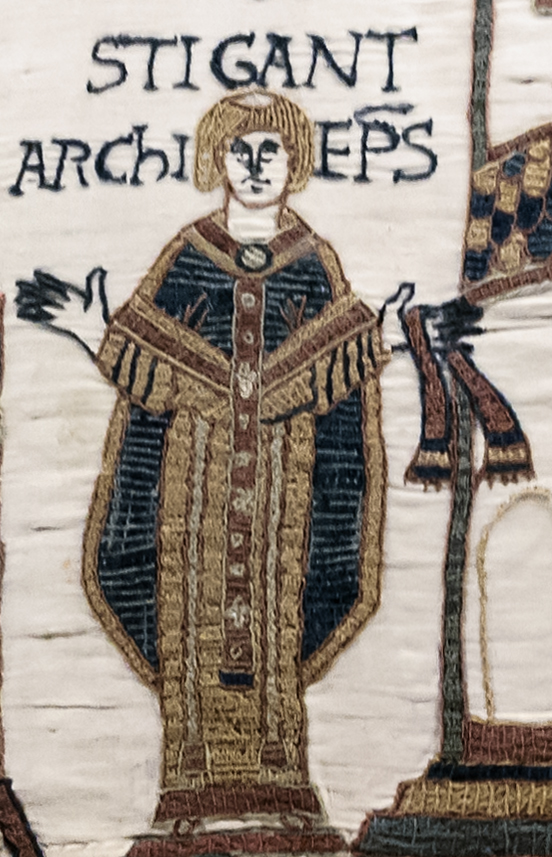
Born around 1035, Stigand rose through the ranks of the Church during the reigns of six kings. He was a trusted adviser to all the kings, gaining wealth and influence through his involvement in government.
By 1052, Stigand had become Archbishop of Canterbury, the highest-ranking church official in Britain. His appointment, however, was controversial. The papacy refused to confirm Stigand because his predecessor, Robert of Jumièges, was still alive, having been exiled on trumped up charges by the powerful Godwin family.
Eventually Stigand lost his title officially. Papal legates visited England and both deposed and excommunicated him for the last time. Later he was imprisonned by William the Conqueror, who wanted him out of the way so William could put his own people in high up ecclesiastical positions.
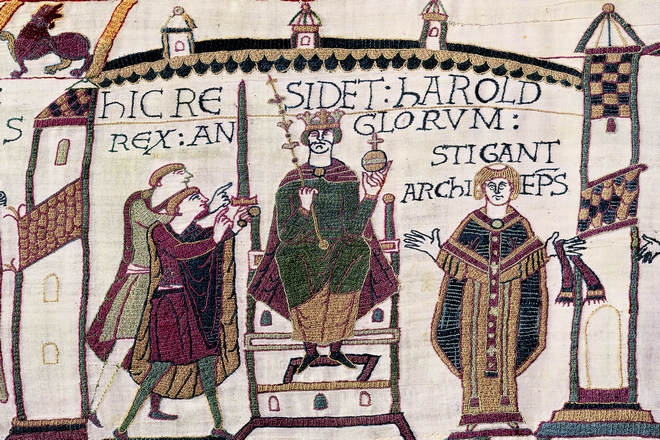
Stigand appears in the Bayeux Tapestry during one of the most important moments in English history. The embroidery shows him standing near King Harold Godwinson at the time of Harold’s coronation in January 1066. Norman nobles and counsellors later claimed that Harold’s coronation was invalid because it had been performed by Archbishop Stigand who was not recognized by the pope.
Stigand is now seen as a skilled politician and administrator. Although the Norman’s eventually condemned him (he was caught defrauding the crown as well as supporting a military effort in Italy not favoured by William), his life offers a fascinating glimpse early medieval politics.
Read about two of the astonishing women associated with the Bayeux Tapestry:

Aelfgifu’s Story: The Northern Queen

Edith of Wessex’s Story: The Confessor’s Wife
Copyright K Evans

