While the Tapestry portrays mainly men, there are four women closely associated with the Tapestry:
Edith of Wessex
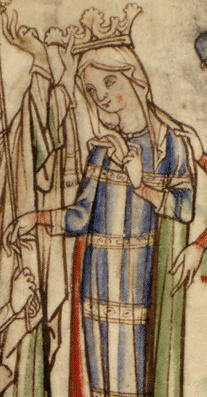
Edith (c. 1025–mid-11th century) was the daughter of Godwin, Earl of Wessex, and became the wife of Edward the Confessor, King of England. Through her marriage, she allied the powerful Godwinson family with the royal house.
She is often described as a political and religious figure who supported her husband’s reign and the church. Her marriage to King Edward produced no children, leaving a succession crisis.
Edith’s prominence in historical accounts largely derives from her position within the Godwin–Wessex elite and her role as queen consort during a pivotal pre-Conquest era.
Aelfgifu/Ælfgyva of Northampton
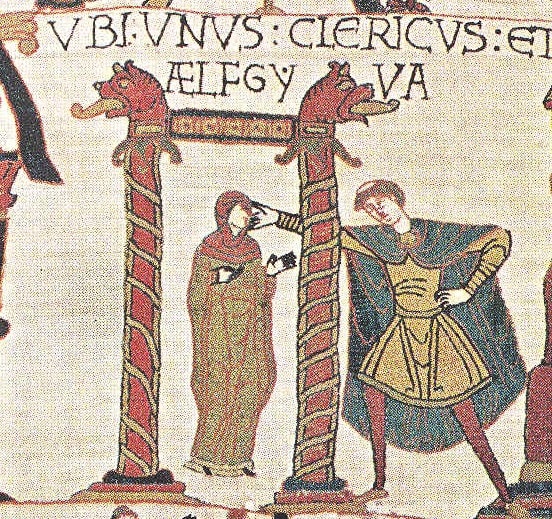
Aelfgifu was born into a powerful Mercian family, likely the daughter of the ealdorman of Northumbria, Ælfhelm of Northampton. After the Danish conquest of 1013–1016, she became Cnut’s first wife.
She bore Cnut two sons, Svein (Sweyn) and Harold—later King Harold Harefoot of England (1035–1040). Aelfgifu and her sons were key instruments of Cnut’s dynastic strategy across a North Sea empire linking England, Denmark, and Norway.
Around 1030, Cnut installed Aelfgifu and their son Sweyn as regents in Norway. Contemporary and near-contemporary sources portray her rule there as heavy-handed; later Norwegian saga tradition turned her into a byword for foreign misrule. Whether fair or not, this reputation has stuck.
Matilda of Flanders
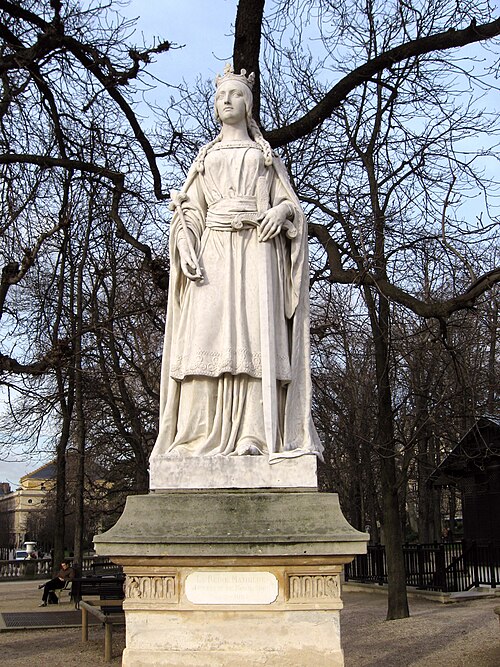
Matilda of Flanders, Queen of England and Duchess of Normandy, stands as one of the most influential women of the 11th century. Born around 1031 to Baldwin V, Count of Flanders, and Adela of France, she descended from the kings of France, the emperors of Germany, and even the Anglo‑Saxon royal line — a pedigree that made her an invaluable political partner to William, Duke of Normandy, better known as William the Conqueror.
Although she is often overshadowed by her husband Matilda played an important role in the Norman rise to power.
Edith Swan-Neck
Also known as Eadgifu, Edith the Fair, or Edith Swan-Neck, is one of the most haunting figures of the Norman Conquest. She was the long‑time consort of King Harold Godwinson (Edith of Wessex’s brother), mother of several of his children, and a woman whose story blends history, legend, and tragedy.
Edith was born into a wealthy Anglo‑Saxon family and became Harold Godwinson’s partner around the early 1040s. Their union was a Danish-style handfasting marriage, fully recognized in England but not by the Church. Together they had five or six children, forming a stable and influential household long before Harold became king.
When Harold married Edith of Mercia (also known as Ealdgyth or Aldgyth) in 1066 for political reasons, Edith Swan-Neck remained his emotional and domestic partner — a situation not uncommon in Anglo‑Saxon aristocratic life.
Read about two of the astonishing women associated with the Bayeux Tapestry:
Aelfgifu’s Story: The Northern Queen
Edith of Wessex’s Story: The Confessor’s Wife
Copyright K Evans

